CAR.SPACE
578A Turbo
Toyota›Toyota 7›578A Turbo (1970)

578A Turbo

578A Turbo (1970) · 1970–1970RWD

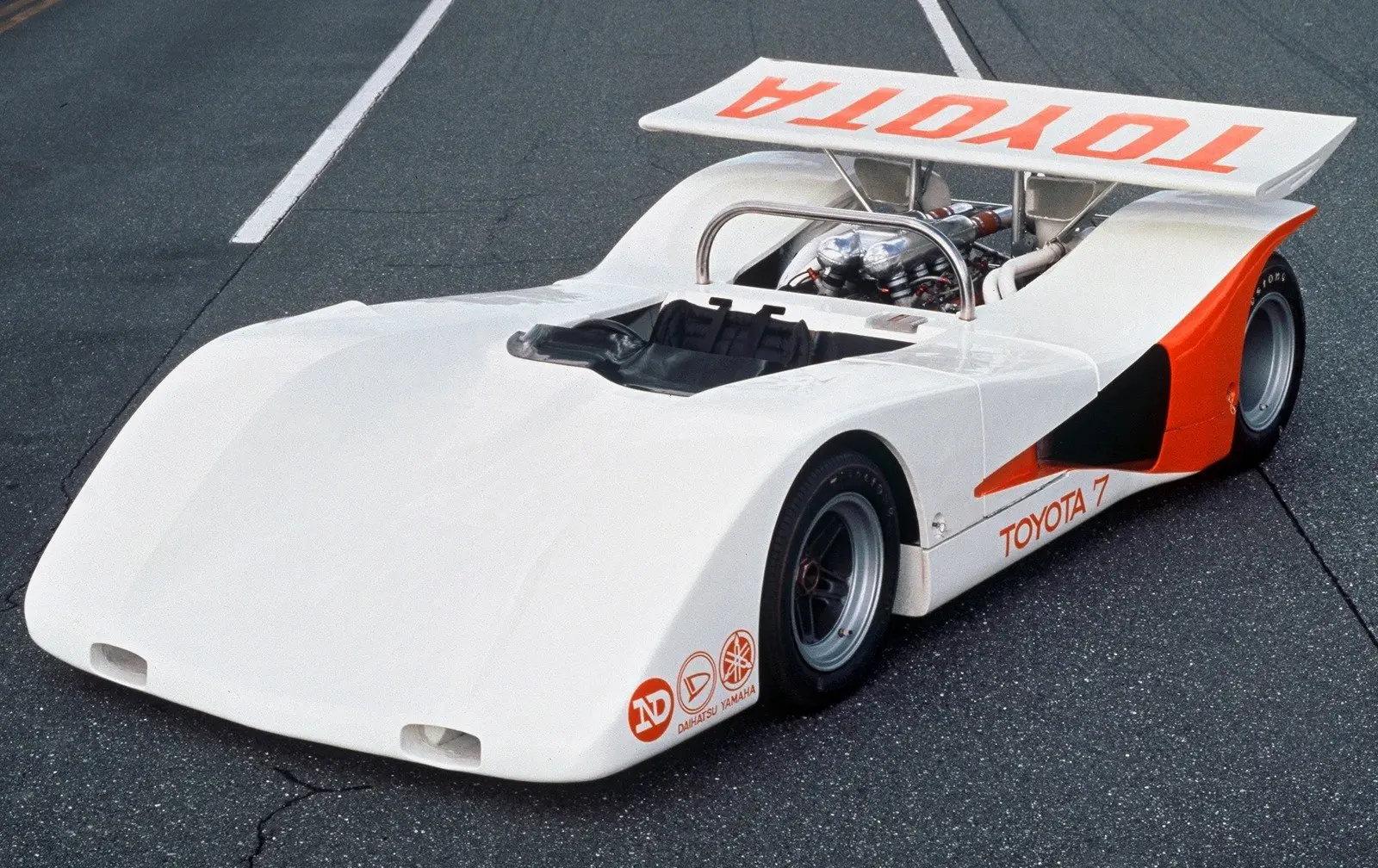
The twin-turbocharged '578A' was the ultimate Toyota 7, built around a lightweight aluminium space frame with titanium and magnesium components, weighing just 620 kg. Its 5-litre 91E V8 with two Garrett AiResearch turbochargers was rated at roughly 800 hp and intended for a Can-Am and 1970 Japan Grand Prix campaign against the Porsche 917. It never raced: development ceased after test driver Minoru Kawai was killed at Suzuka in a 1970 testing accident, and the program was cancelled when the Japan GP switched to open-wheel cars. A surviving example is displayed at the Toyota Automobile Museum.

789 hpPower
363 km/hTop Speed
1970-1970Year
Engineering passport

Specifications

Powertrain
Engineering details
Engine5.0 L (4,986 cc) 91E twin-turbo DOHC V8
Displacement5.0 L
Cylinders8
FuelPetrol
Transmission5-speed Aisin Manual
DrivetrainRWD
Performance
Numbers that matter
Power789 hp
Top speed363 km/h
Weight620 kg
Consumption125 L/100 km
Wheelbase2350 mm

STORY

Toyota built the 7 for Japan's Group 7 races, a mid-engined open prototype with an aluminium spaceframe that first ran at the Japanese Grand Prix at Fuji on 3 May 1968 as the 3-litre 415S. The 1969 474S used the 5-litre 61E V8, which Toyota declared at 330 PS at 8,500 rpm and which actually reached 328 PS at 8,000. Minoru Kawai drove it alone to third place at that year's Japanese Grand Prix, leading the first two laps, and won the World Challenge Cup Fuji 200 Mile on 23 November 1969. The 578A of 1970 took a twin-turbocharged version to a declared 800 PS, a figure Toyota itself understated. Against the Chevrolet-engined Nissans the problem was power, against the two-litre Porsche 910 it was weight. Toyota withdrew in 1970 and the car never raced.

Price Evolution

Loading auction history…

Track Records

Loading records…