Toyota AE86
Drift foundation platform
Japan roots and lightweight rhythm
The momentum-first origin myth: low power, high commitment, weight transfer and the idea that style can beat specification.
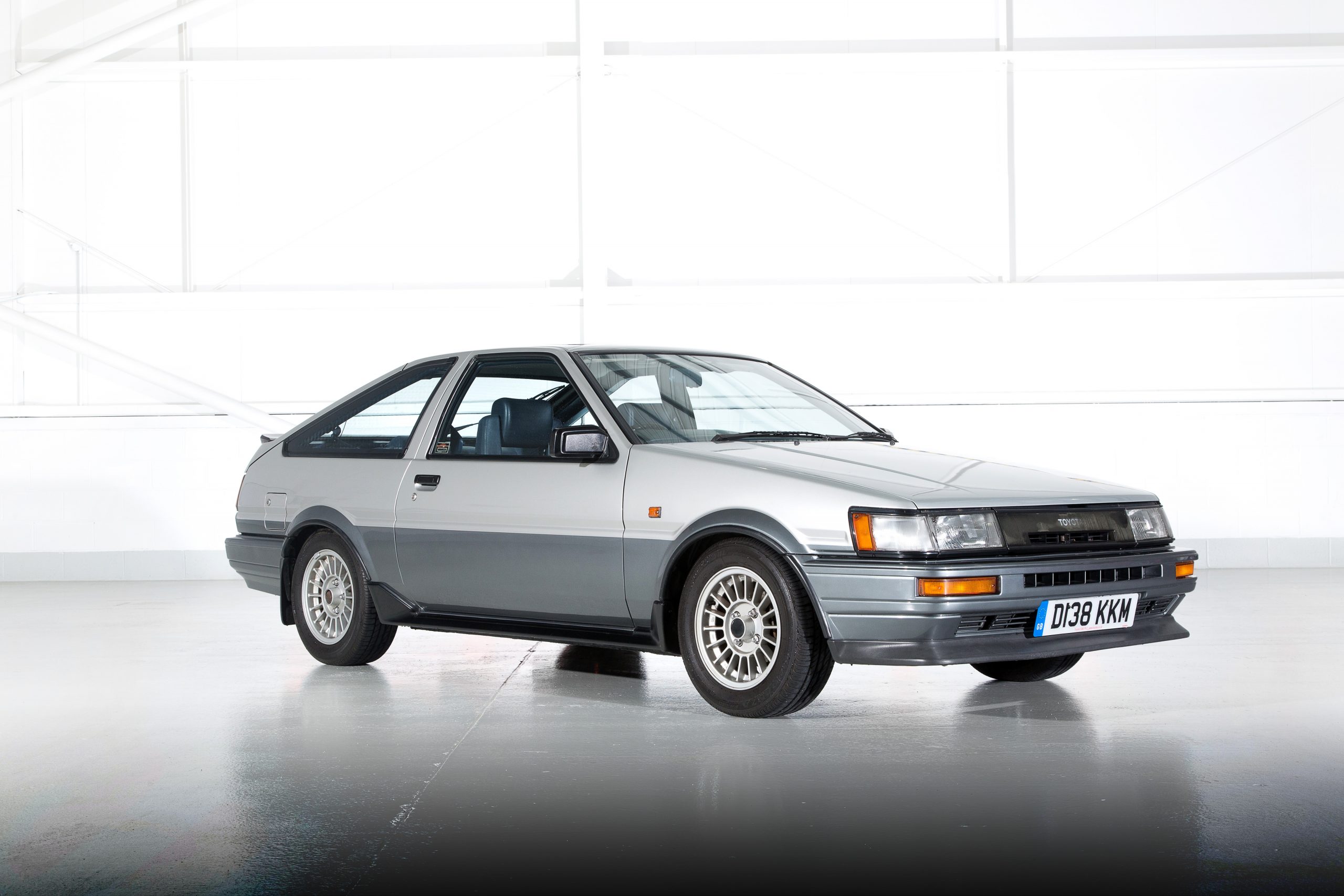
A 1980s Corolla coupe with under 130 horsepower that became the founding chassis of organised Japanese drift. Light, balanced, easy to repair, the AE86 made it possible for amateur drivers in 1990s Japan to learn the discipline on a public salary.
Keiichi Tsuchiya turned it into a national obsession on the Gunma touge before Initial D ever existed. Shuichi Shigeno made the chassis a global symbol the moment Takumi Fujiwara delivered tofu at dawn down Akina.
The platform is still the easiest entry into competitive grassroots drift in 2026, angle kits, hydro brakes, welded diffs and a 4A-GE that pulls cleanly to 9,000 rpm. Every modern AE86 build is half engineering, half pilgrimage.
At a glance
- Region: Japan
- Tags: Touge, Momentum, Lightweight
Key facts
- Era: 1983–1987
- Engine: 4A-GE 1.6 L inline-four
- Power: 128 hp (stock)
- Weight: ~940 kg
- Drivetrain: Front-engine, RWD
- Cultural debt: Initial D, Best Motoring
Drivers
- Keiichi Tsuchiya, The Drift King. Defined touge drift at Gunma in his Trueno before drift was a category. Sold the AE86 to the world before Initial D existed.
- Takumi Fujiwara, Fiction, Initial D protagonist. Delivers tofu down Mt. Akina at dawn in his father's Trueno. The most cited AE86 driver in any medium.
Records and milestones
- 1987: Touge supremacy. Tsuchiya's underground touge tapes start circulating, the AE86 becomes the first mythologised drift platform.
- 1995: Initial D begins serialization. Shuichi Shigeno's manga launches in Weekly Young Magazine. The AE86 becomes a global icon overnight.
- 1998: Initial D anime adaptation. Stage One ships with Eurobeat licensed in. The AE86-vs-FD3S sequence becomes the most quoted drift footage ever.