1995: Initial D begins serialization
Moment in drift history · JP
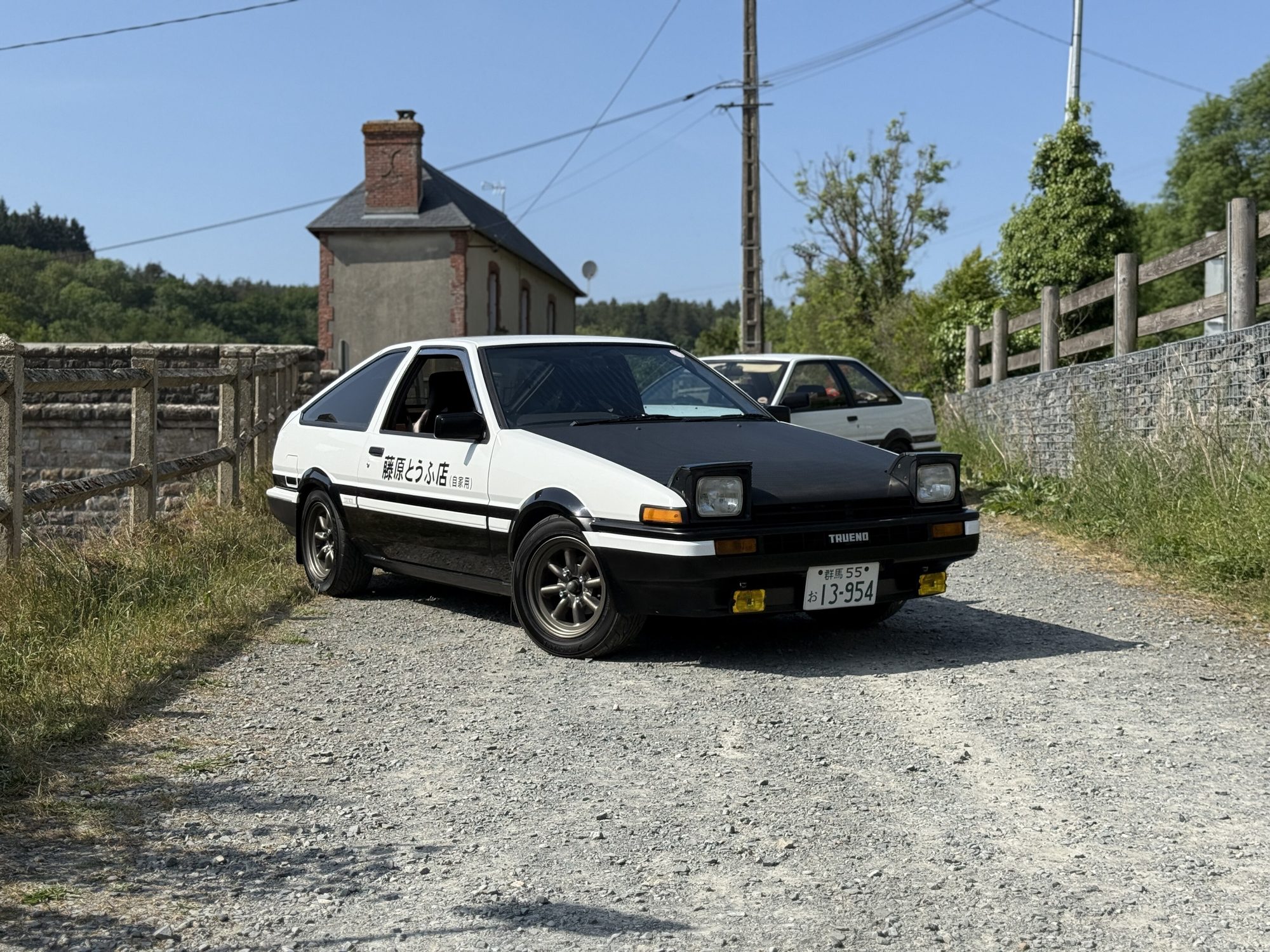
Shuichi Shigeno's manga turns a tofu-delivery teenager and an AE86 into a global symbol. Eurobeat and tofu deliveries become inseparable. The anime arrives in 1998 and exports the touge mythology to every car-curious teenager on earth.
Shuichi Shigeno started Initial D in Weekly Young Magazine in 1995. The premise was modest: a teenager named Takumi Fujiwara delivers tofu down the mountain he calls "Akina" (modelled on the real Mt. Haruna) at dawn in his father's Toyota AE86 Trueno, turns out to be the fastest touge driver in the area, gets pulled into formal street-racing battles against newer, more powerful cars, wins.
The serialization ran in print for eighteen years (to 2013) and became one of the most-cited drift narratives in any medium. The anime adaptation began in 1998 with a soundtrack of licensed Eurobeat (Dave Rodgers, Manuel) and J-dance openers from m.o.v.e, and exported the touge mythology to a global audience that had never set foot in Gunma Prefecture.
The cultural debt to the show is large. The AE86 became a global object. Eurobeat became fused with drift aesthetics. Mt. Haruna, the real "Akina", became a pilgrimage. Many drifters of the following generation cite it as a first contact with the sport. Keiichi Tsuchiya served as the series' editorial supervisor and driving consultant.
Who was there
- Shuichi Shigeno, Manga author / creator
- Keiichi Tsuchiya, Editorial supervisor, driving consultant
Cars
What happened next
- AE86 prices on the second-hand market climb steadily through the late 1990s and into the 2000s as global demand multiplies.
- Eurobeat enters drift culture permanently. Initial D OST volumes become reference compilations decades after release.
- Mt. Haruna, the real "Akina", becomes a pilgrimage road for fans of the series.